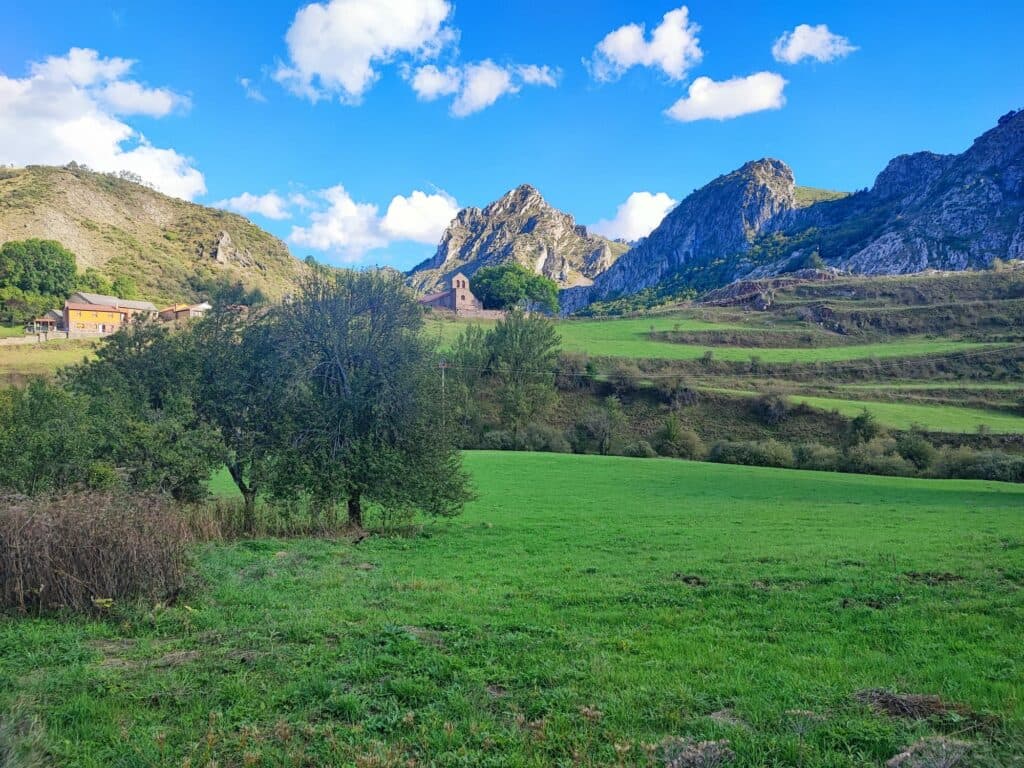

In the northernmost heart of the province of León, where the mountains draw some of the most breathtaking landscapes of the Cantabrian range, lies Canseco — a small village belonging to the municipality of Cármenes and to the historic region of Los Argüellos. Part of the Los Argüellos Biosphere Reserve, this corner offers the visitor a singular journey through the nature, history and traditions of a land shaped by centuries of life shared between people and the mountains.
A valley among mountains
Canseco sits in a narrow valley of glacial origin, surrounded by summits, forests and ancient paths that for generations linked its people with the neighbouring villages. To the west it borders Campo and Piornedo; to the south, Pedrosa, Lavandera and Genicera; and to the east Redilluera, Llamazares, Cerulleda and Redipuertas, the latter belonging to the municipality of Valdelugueros.
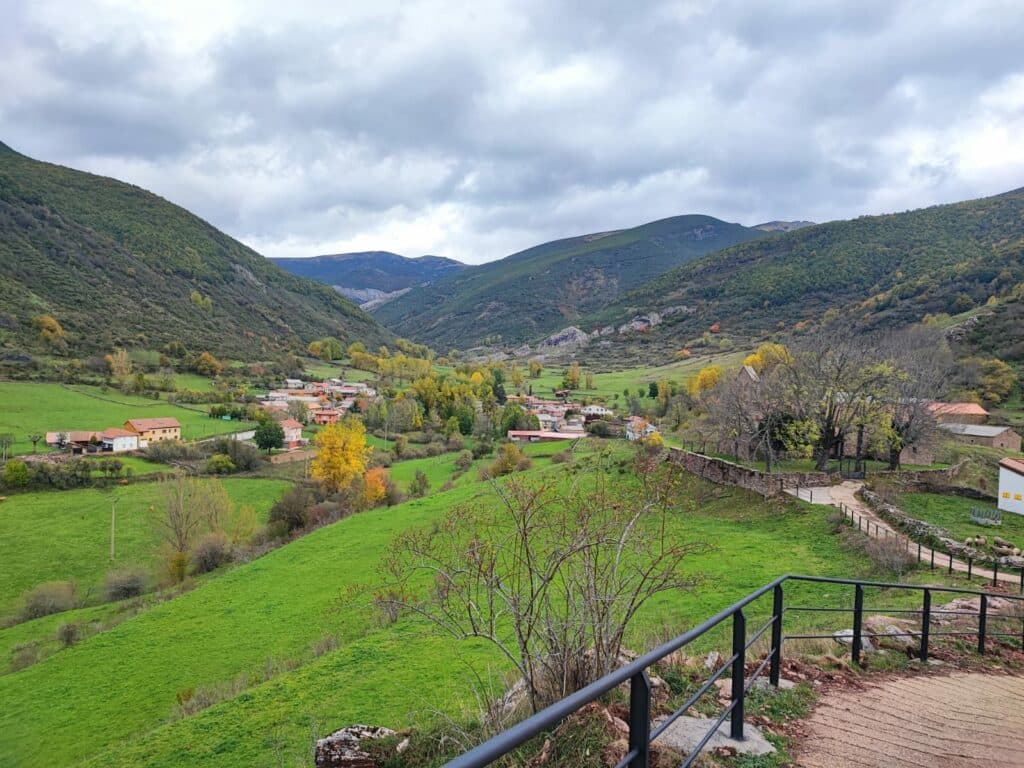
Its privileged natural setting invites you to explore an extensive network of trails born from old droving routes. These paths lead to places of extraordinary beauty, such as the Bodón beech wood, the pools of La Fervenciona and Los Eros, or the historic passes that connect with Genicera, Redilluera and Llamazares. Numerous streams and brooks — among them those of Murias and Penoba — cross the landscape, recalling a time when shepherds occupied the high summer pastures to make the most of the rich mountain grasslands.
Ancient roots
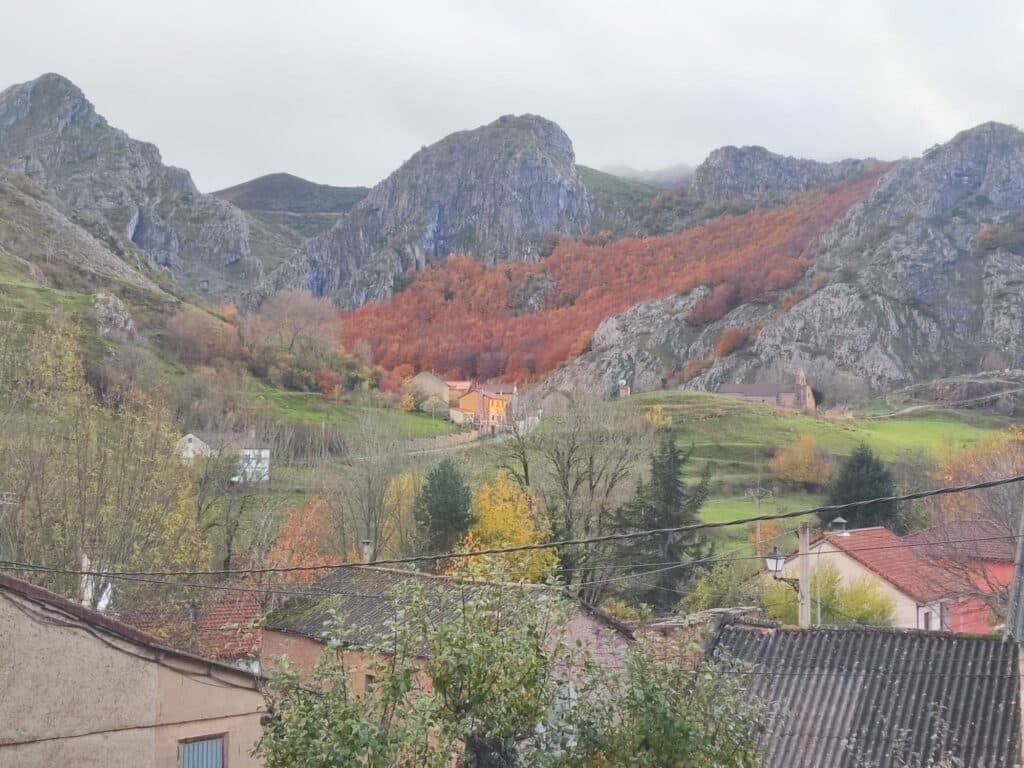
The history of Canseco reaches back to remote times. Its rugged geography favoured the settlement of hillfort communities that, with the arrival of Rome, gradually joined the process of Romanisation. Centuries later, the spread of Christianity left a deep mark on the local identity, still visible today in its religious monuments.
Foremost among them is the parish church of San Pedro Apóstol (Saint Peter the Apostle), in the Palombera quarter. The church preserves a remarkable papal bull granted in 1793 that twinned the parish with the Basilica of St John Lateran, the cathedral of Rome and the papal seat. Beside it stands the chapel of San Roque, in the Cansequillo quarter, the spiritual heart of the village's most popular celebrations. Every August, during the patron-saint festivities, the image of San Roque is carried through the streets accompanied by the historic council banner dedicated to Saint Peter, patron of the village and a symbol of its people's collective identity.
The Tower and its legends
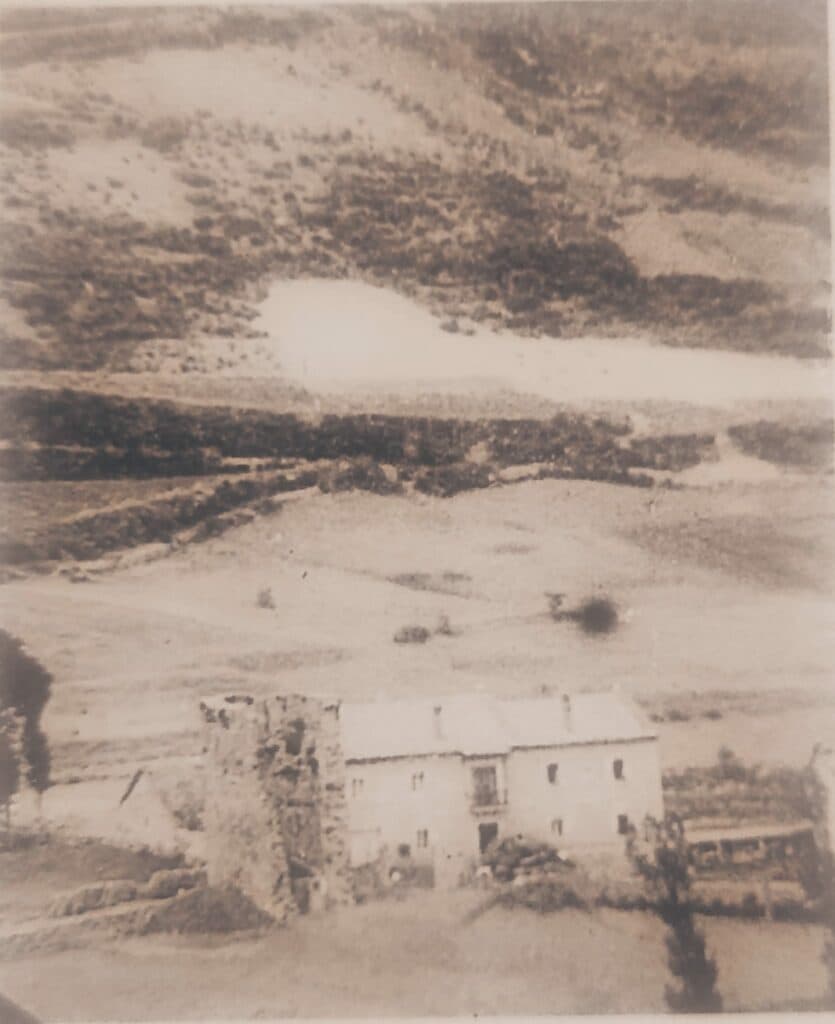
Archaeological remains hint at the strategic importance the site held in antiquity. Several studies point to ancient hillforts in the upper part of the village, and evocative place-names such as La Portilla still survive, perhaps marking the main entrance to one of these settlements. There also remain the ruins of what may have been the vanished castle of Arbolio, in Palombera, as well as an old medieval tower that watches over the entrance to the village.
The Tower of Canseco (el Torreón) is in fact one of the most singular pieces of heritage in the whole region. Dated to around the 14th century, it is the only medieval tower preserved in Los Argüellos. Its silhouette has fired the popular imagination for centuries.
The legends tell of golden chains hidden beneath its foundations and of an underground passage that connected the tower with the church of San Pedro, running under the meadows of La Vega and Los Barriales as far as the Puente del Verdugo (the Hangman's Bridge).
Stories that form part of the rich oral heritage passed down from one generation to the next.
A land of free men and muleteers
The Middle Ages also left a deep social imprint. Since the time of King Alfonso X the Wise, Canseco shared with the rest of Los Argüellos the privilege of being a land of hidalgos — free, untaxed noblemen. To this status was added an intense muleteering tradition that shaped the local economy for centuries. The muleteers carried fish from Asturias towards Castile and returned with wine, making Canseco a regular stop on the trade routes that crossed the mountains.
Those difficult journeys gave rise to the famous forcaos, peculiar sledge-like dragging vehicles that allowed goods to be carried along paths where ordinary carts could not pass. Their memory lives on in folklore and in the verses handed down by the people of the region.
Mines, returning emigrants and prosperity
The Industrial Revolution reached even this mountain corner. During the 19th and 20th centuries small mines of coal, iron and stone were worked at various points of the district, an activity that continued until the end of the last century. At the same time, emigration to the Americas left a deep mark: the so-called indianos — emigrants who had made their fortune overseas — returned with new ideas and resources that transformed part of the village.
Two of its most emblematic buildings are the fruit of that prosperity. The first is the bowling green of El Malecón, built in memory of Cuba and still today the scene of passionate contests during the San Roque festivities. The second is the imposing Casino, opened in 1924, which once had three floors and now houses the headquarters of the Pico Huevo Cultural Association, the true engine of local cultural life.
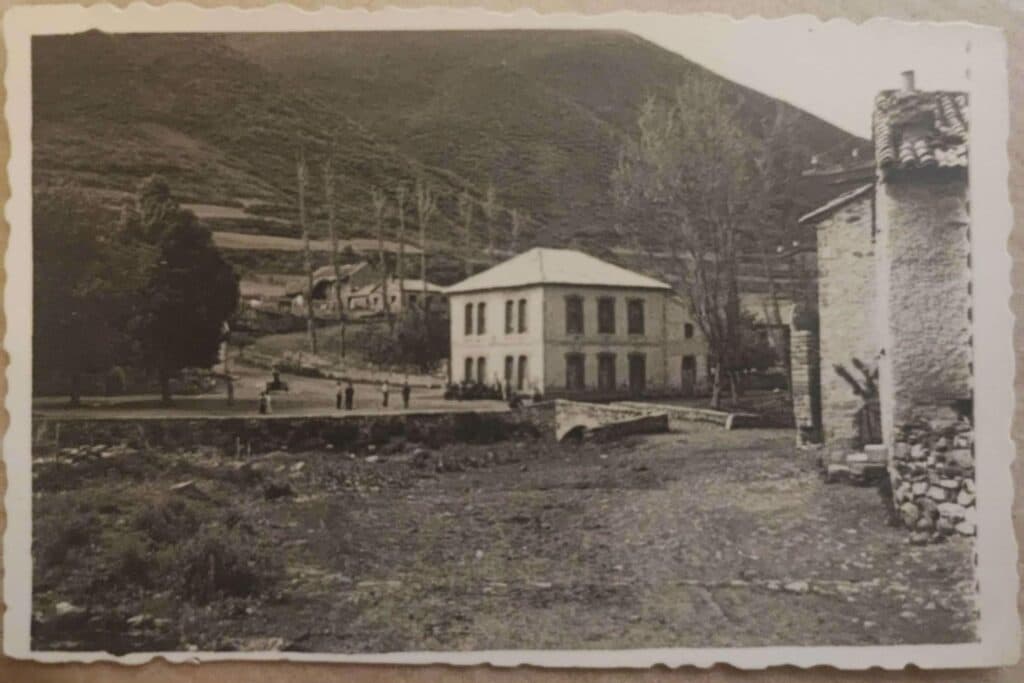
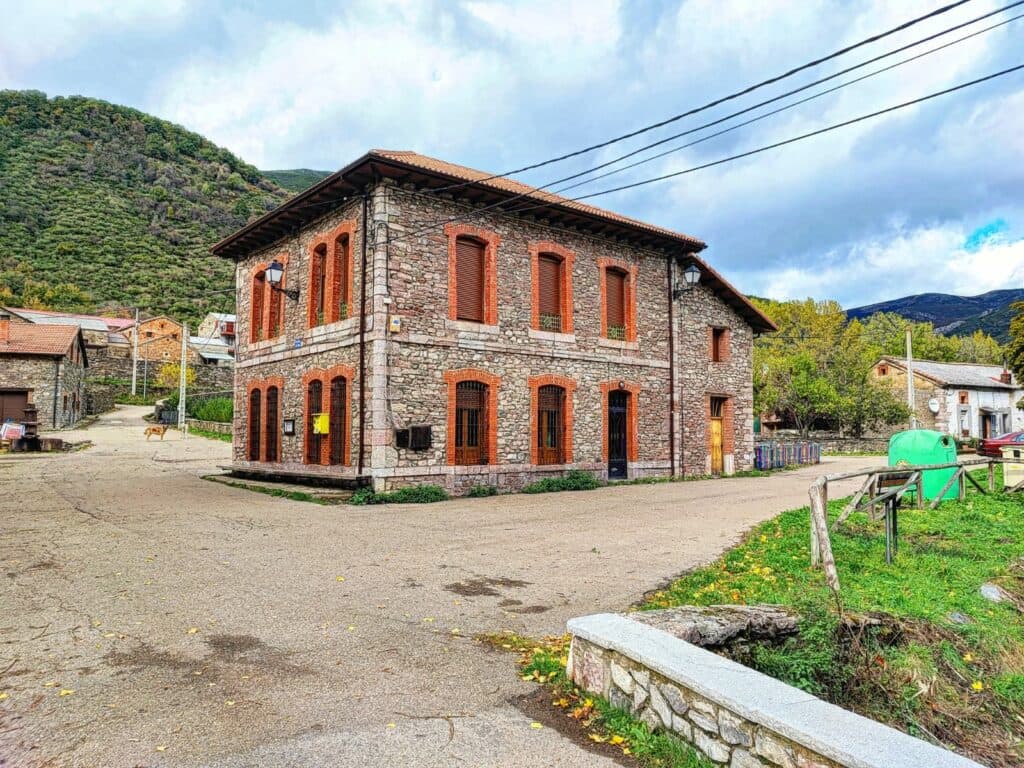
The enterprising spirit of its inhabitants also made Canseco a pioneer within the province of León. One of the first self-sufficient mini hydroelectric plants was installed here, able to supply the whole village with electricity through an ingenious generating system that harnessed the power of its rivers.
Water, the valley's treasure
Water is indeed one of Canseco's great treasures. Numerous springs, streams and watercourses converge in its territory. The Palombera river pours its waters into the Canseco river — itself formed by the Murias and Penoba streams — making up a hydrographic network that has been essential to daily life and to the economic development of the village.
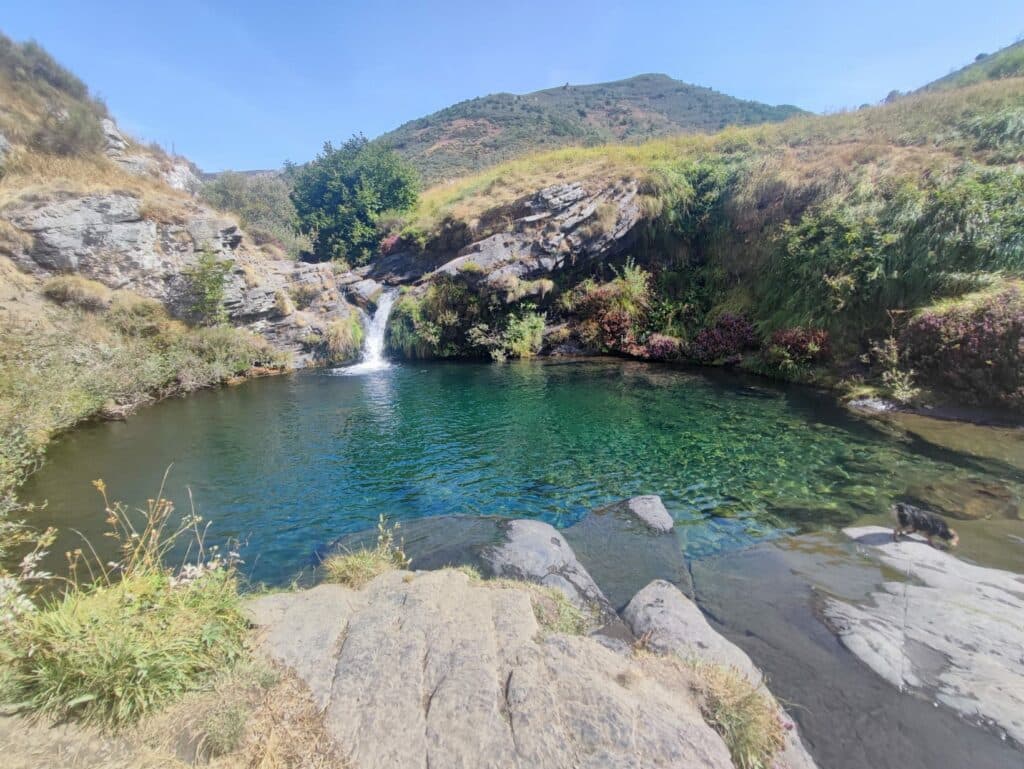
Near the medieval bridge of Bodón, old testimonies of popular spirituality survive. Tradition recalls the offerings once made to the souls of the dead beside a nearby spring and cave, while various specialists point to the possible existence of the remains of an old Roman road that crossed this natural pass.
Architecture and memory
Traditional architecture is another of the village's great attractions. Its solidly built houses, originally roofed with straw or slate, reflect a centuries-old adaptation to the harsh mountain climate. Although many of these roofs were later replaced with tile, some original examples can still be seen. The Spanish Civil War left a deep scar on Canseco, destroying much of its housing; the slow post-war reconstruction, carried out with the scarce resources available, helped shape the village we see today.
As happened in so many other villages of the León mountains, the 20th century brought the gradual abandonment of traditional farming and herding. Rural exodus drastically reduced the population, until barely a couple of dozen people remained through the winter months. Yet, far from disappearing, Canseco lives on in the memory of those born here and of their descendants. Every summer the streets fill again with voices and gatherings, renewing an emotional bond that crosses the generations.
To visit Canseco is to discover a land where nature, history and collective memory still walk together — a place where every path, every stone and every legend keeps the echo of those who, over the centuries, built the identity of one of the most authentic corners of the León mountains.